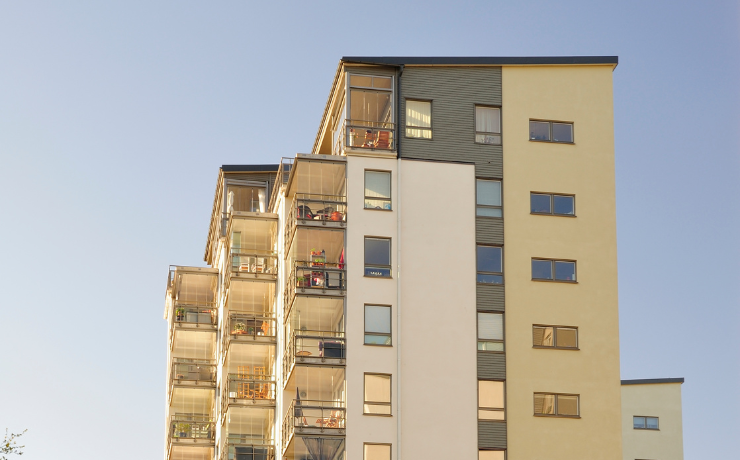
New funding is now available for eligible residential buildings under 11 metres in England, delivered by Homes England through the Cladding Safety Scheme. Published in July 2026, this funding represents a significant development for responsible entities managing smaller residential buildings with cladding concerns – buildings that have historically had fewer options when it comes to accessing financial support for remediation works.
If your building is under 11 metres and you have a Fire Risk Assessment of External Walls in place, now is the time to understand what your findings mean and whether your building could qualify. Fire safety compliance does not become less important because a building is smaller. If anything, the arrival of this funding removes one of the most commonly cited barriers to acting on outstanding FRAEW findings.
What Is the Cladding Safety Scheme?
The Cladding Safety Scheme, known as the CSS, is managed by Homes England and meets the cost of addressing life safety fire risks associated with cladding on residential buildings in England. It is part of the wider Building Remediation Portfolio, which exists to ensure residents are safe from risks associated with unsafe cladding.
Applications are made through the Building Remediation Hub and the scheme is available to both private and social sector applicants where they meet the eligibility criteria. It applies to buildings in England only.
Who can apply matters. Only the Responsible Entity for a building can access CSS funding. This is the person or organisation legally responsible for the building’s external repair and maintenance. The Responsible Entity may be the building’s freeholder or head leaseholder, a registered provider of social housing, a management company, a section 24 manager, or a Right to Manage company.
New Funding for Buildings Under 11 Metres
The new funding for buildings under 11 metres, published 9 July 2026 by the Ministry of Housing, Communities and Local Government and Homes England, extends the reach of the Cladding Safety Scheme to smaller residential buildings that may previously have fallen outside its scope.
This is a meaningful development. Smaller buildings with cladding concerns have often faced the same fire safety compliance challenges as taller buildings, but with fewer routes to funding. This changes that picture.
For responsible entities managing buildings under 11 metres with outstanding FRAEW findings, this funding could cover remediation works that have been sitting unaddressed. The full eligibility criteria and supporting documents are available on the Buildings under 11 metres: new funding page on GOV.UK. We strongly recommend reviewing these in full to establish whether your building qualifies.
What Is a FRAEW and Why Does It Matter?
A FRAEW, or Fire Risk Assessment of External Walls, is a specialist assessment of a building’s external wall system. It identifies fire safety risks within the external wall construction – the materials used, the design of the system, and how the wall is likely to perform in the event of a fire.
For the purposes of the Cladding Safety Scheme, a FRAEW is not optional. To be eligible for CSS funding, you must have a FRAEW in place, and it must have been completed by a firm on the CSS panel of Fire Risk Assessors. Assessments completed by firms not on the panel will not meet the scheme’s requirements.
The government guidance is clear that not every building will need a detailed FRAEW. Where a building has external walls comprising only masonry or concrete construction, the risk of fire spread may be sufficiently low that a standard fire risk assessment addresses external wall compliance. Where a FRAEW is needed, it must be undertaken in line with PAS 9980:2022 methodology and summarised using the CSS summary sheet.
If You Already Have a FRAEW, Here Is What to Do Next
If a FRAEW is already in place for your building, the most important step right now is to review it carefully. Specifically, consider whether any high-risk items have been identified, what remediation works have been recommended, whether those risks are still outstanding, and whether a competent contractor is in place to deliver the required works.
Outstanding high-risk FRAEW findings represent a real fire safety risk to occupants. Having the paperwork in place is not the same as being compliant. Building fire safety compliance means acting on what assessments tell you, not simply having the documentation filed away.
For a clearer picture of how to approach fire safety findings once an assessment has been carried out, our guide on what happens after a fire risk assessment covers the key steps in detail. And for a broader understanding of what a passive fire protection survey involves, our post on what a passive fire stopping survey actually involves is a useful reference point.
How Isoler Can Help With Remediation
If your FRAEW has identified external wall issues that need addressing, our team has the expertise and practical capability to support you through the remediation process. We work with responsible entities to understand assessment findings, determine the correct remediation approach, and deliver works to the standard required.
Our fire stopping and compartmentation service and compliance professional services cover the full remediation process, from initial review of FRAEW findings through to completed works and compliance documentation. For buildings where interim fire safety measures such as waking watch are currently in place, our post on waking watch and how to plan for its end explains the route from interim measures through to full remediation.
If you have a FRAEW with outstanding high-risk items and want to understand your options under the Cladding Safety Scheme, get in touch with the Isoler team today. We will give you a straightforward assessment of where your building stands and how we can help you move forward.